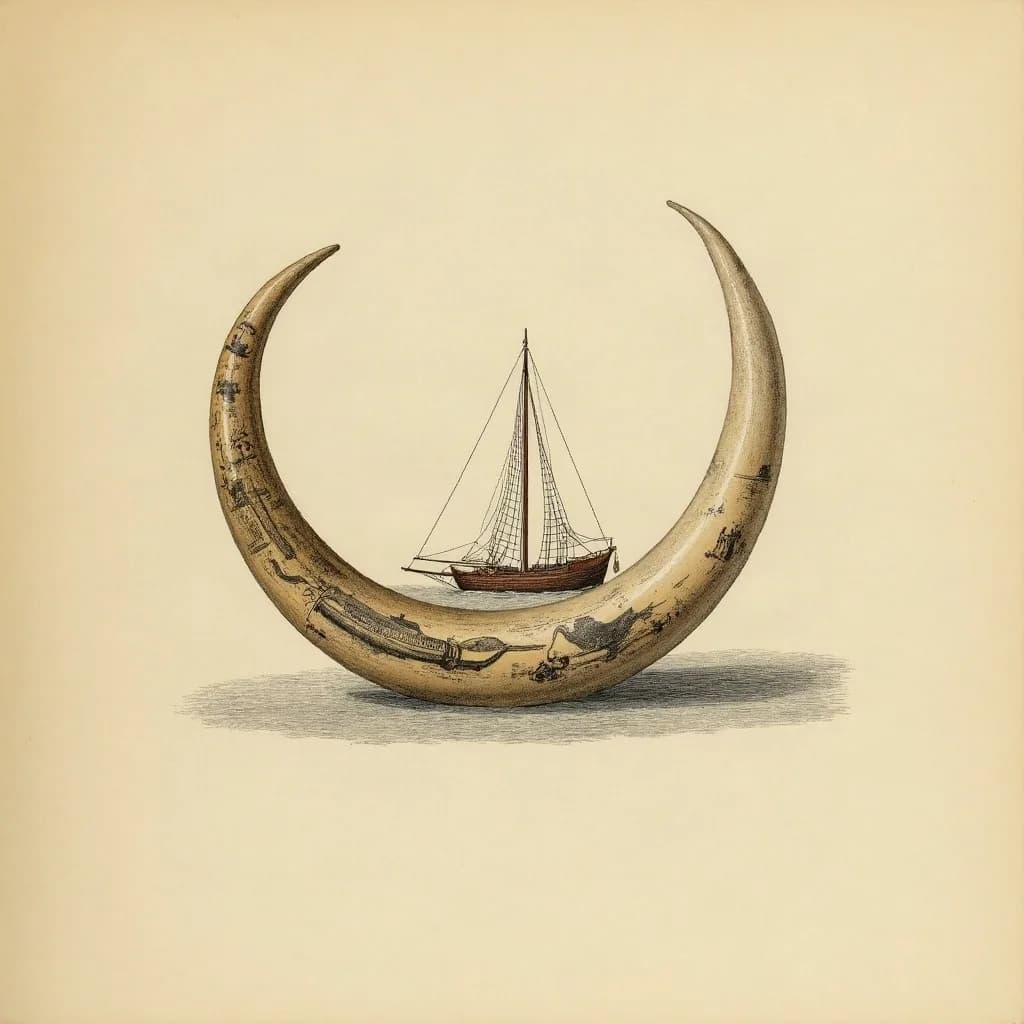
Narwhal tusk fragment with scrimshaw whaling scene, c. 1860
A 9-inch fragment of narwhal tusk, engraved with a whaleboat scene and inked in the manner of mid-century American scrimshaw.
- SKU
- MS-CU-1009
- Era
- Pre-1900
- Condition
- Stable; naturally checked along growth spiral, ink well-preserved.
- Dimensions
- 9 in. L × 1.1 in. dia. at base
- Weight
- 6.4 oz
- Provenance
- Massachusetts estate; in the same family since at least 1867 per probate record.
- Category
- Curiosities & Oddities
- Tags
- scrimshawnarwhalwhalingcabinet-of-curiositiespre-cites
A nine-inch section from the distal end of a narwhal tusk, showing the characteristic left-handed spiral and natural taper, engraved along one face with a whaleboat scene: four oarsmen, a harpooner standing, and, on the horizon, a partially submerged whale. Inked in the manner of mid-century American scrimshaw, likely worked aboard a New Bedford or Nantucket vessel during a Davis Strait voyage.
Narwhal (Monodon monoceros) is CITES Appendix II. This piece predates CITES by well over a century and is documented by an 1867 probate inventory listing 'one horn of the sea-unicorn, carved'. Full paper trail available; we will not ship internationally regardless.
It is, and has always been, a strange object. Medieval Europeans believed these to be the horns of unicorns and paid accordingly. We do not make that claim, but we understand the impulse.
Related finds
More from Curiosities & Oddities →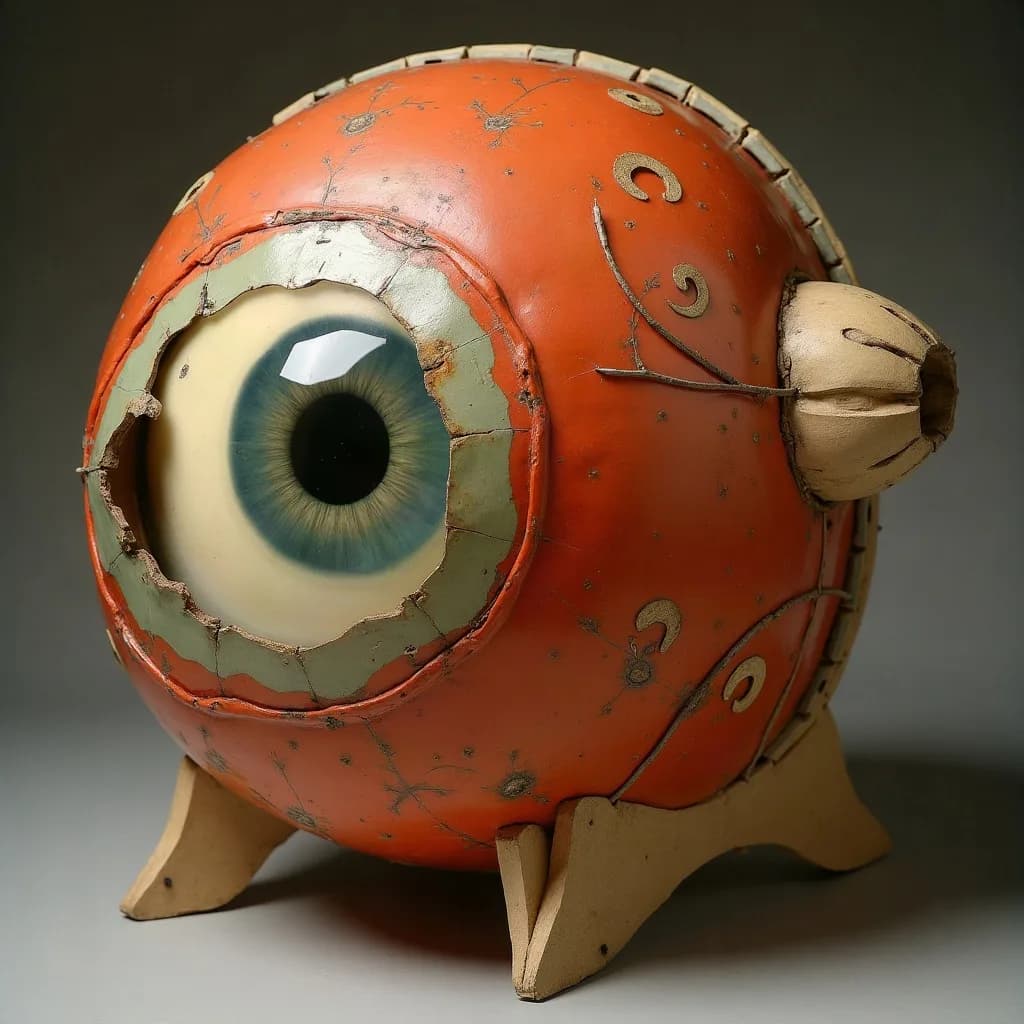
A German pupil-teaching model of the human eye, roughly ten times life size, disassembles into seven hand-painted parts.
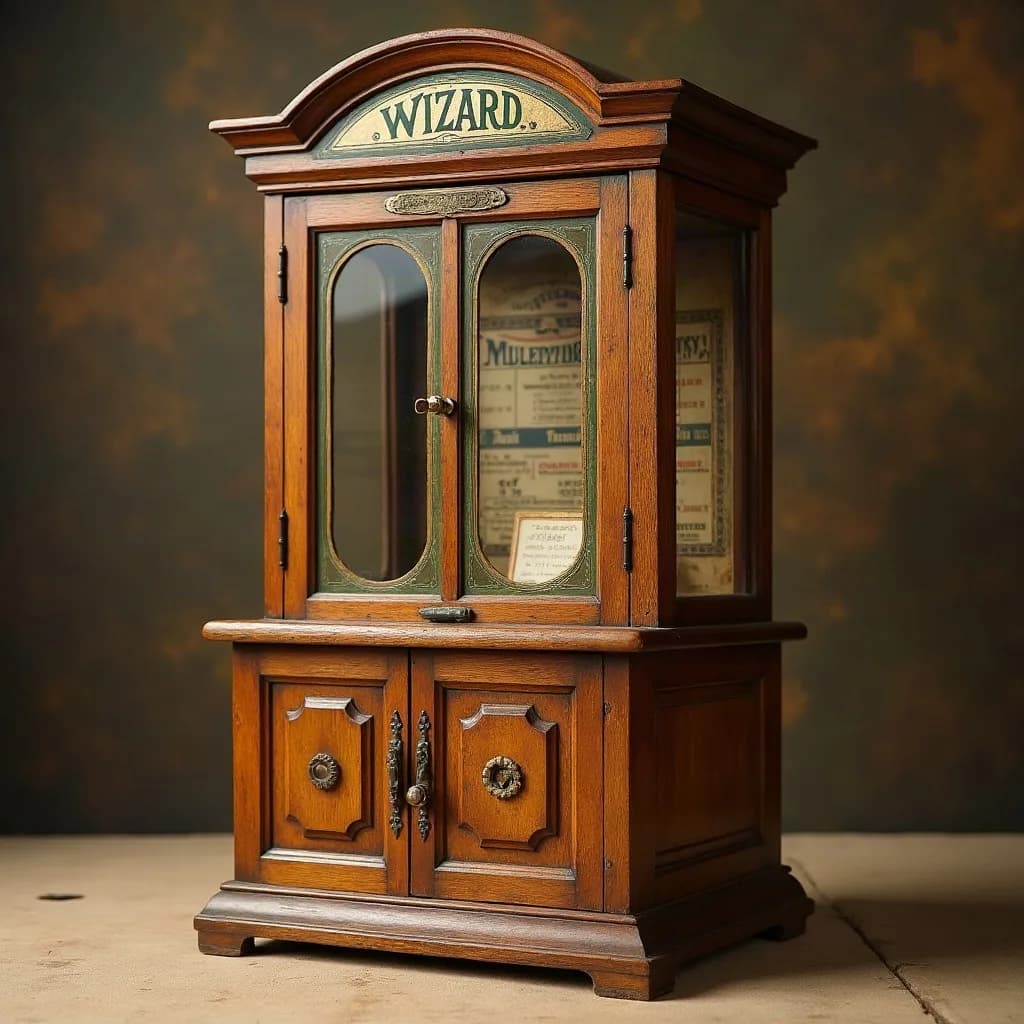
Coin-operated fortune-teller by Mills Novelty Co., Chicago. Feeds a penny, dispenses one of 96 printed fortunes.
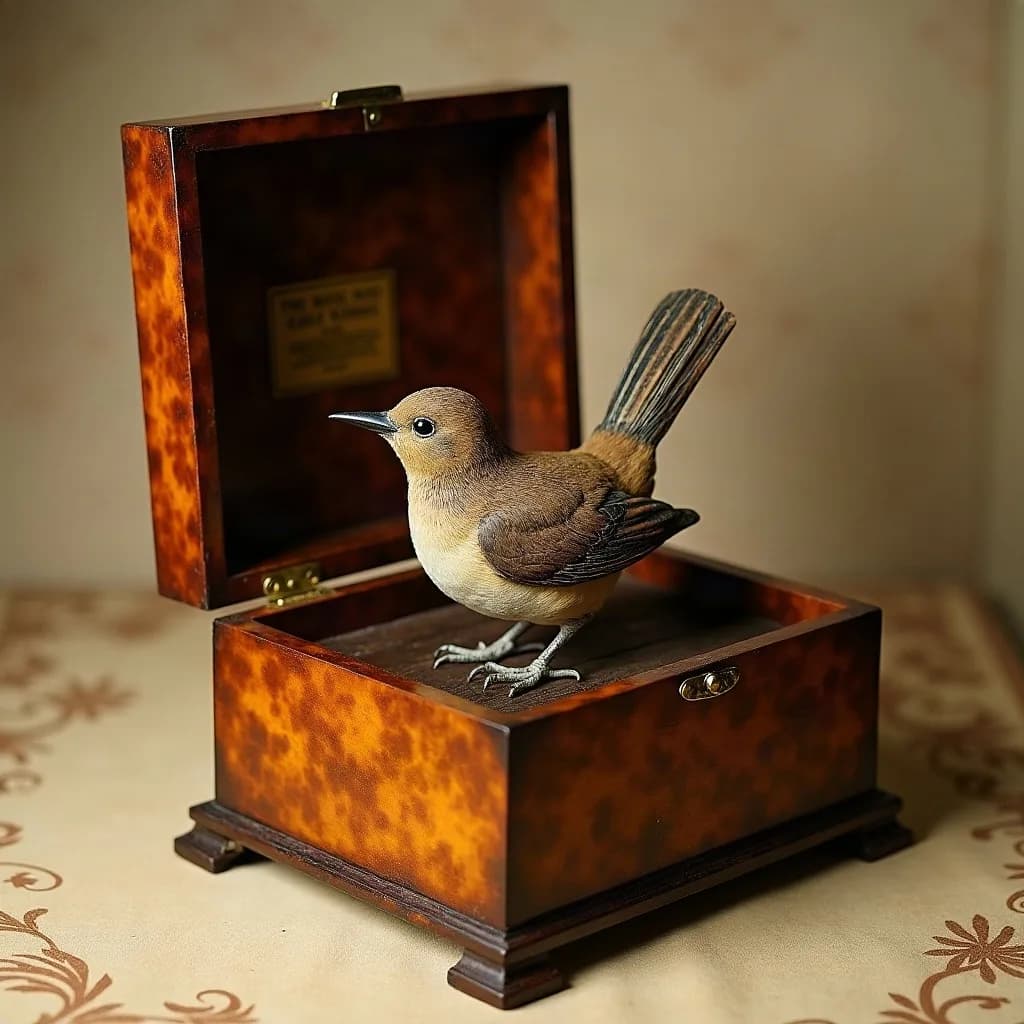
French singing bird box by Blaise Bontems. Lid springs open; feathered bird sings, turns, and blinks before retreating.